
LtCol Joshua Freeland
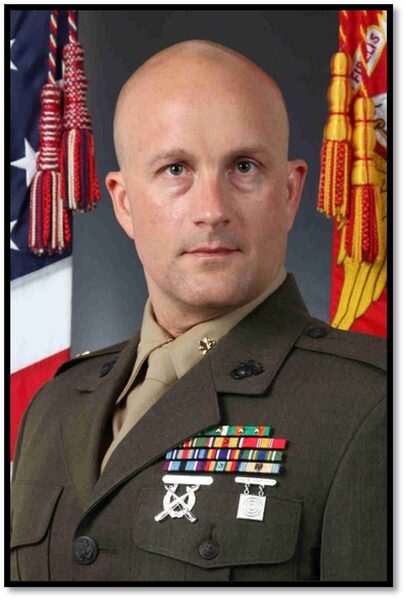
MAGTF PlannerMarine Corps Integration DivisionLtCol Joshua Freeland enlisted through the Delayed Entry Program in August 1997 and graduated from MCRD Parris Island in September 1998. During his enlistment in the Marine Reserves, then-Staff Sergeant Freeland supported Operation ENDURING FREEDOM and Joint Task Force KATRINA/RITA. He received his commission as a Second Lieutenant in May 2008 following graduation from Florida State University and the Officer Candidates Course program.
After completing The Basic School and Air Support Control Officer Course in 2009, LtCol Freeland was assigned to Marine Air Support Squadron 2 (MASS-2) in Okinawa, Japan. During this tour, he deployed twice with the 31st Marine Expeditionary Unit (MEU) and served in various staff and Direct Air Support Center (DASC) positions.
In 2012, he was assigned as the Control Group Liaison Officer to the 607th Air Support Operations Group at Osan Air Base, Republic of Korea. Returning to Japan in 2013, he commanded Air Support Company, MASS-2, before transferring to MACG-18 headquarters as the Korea Plans Officer in August 2014.
In 2015, he returned to the United States and was assigned to Marine Operational Test and Evaluation Squadron (VMX) 22, MCAS Yuma, AZ, serving as the Operational Test Director for phase two of the Common Aviation Command and Control System. In June 2016, he transferred to MAWTS-1 as the DASC Division Head, conducting four Weapons and Tactics Instructor courses and overseeing the approval of the 2017 DASC Tactical Standard Operating Procedures.
Following graduation with distinction from Marine Corps Command and Staff College in 2019, he served as the Executive Officer of MASS-1 and subsequently as the detachment officer in charge of the 24th MEU, where he was the lead airspace command and control planner on the USS IWO JIMA for the fall of Kabul.
In November 2021, he became the Group Operations Officer for MACG-28, managing the deployment of resources to Europe in support of NATO's response to the Russian Federation's invasion of Ukraine. In June 2022, he attended Joint Advanced Intermediate Level School at Maxwell Air Force Base.
LtCol Freeland currently serves as a MAGTF Planner at Deputy Commandant for Combat Development and Integration, developing and implementing Marine Corps Force Design across three Program Objective Memorandum (POM) Planning Cycles.
LtCol Freeland is a graduate of the Expeditionary Warfare School, the Weapons and Tactics Instructor Course, the Marine Corps Command and Staff College, and the Air University School of Advanced Air and Space Studies. He holds a Bachelor of Arts in Anthropology from Florida State University, a Master of Military Studies from Marine Corps University, and a Master of Philosophy in Military Strategy from Air University.
LtCol Freeland’s personal awards include the Meritorious Service Medal, Navy and Marine Corps Commendation Medal, third award, and Navy and Marine Corps Achievement Medal, third award.
Capability Development and the New Joint Force Requirements Process
This session, led by LtCol Joshua Freeland of the Marine Corps Integration Division (MCID), will outline the service's forward-looking strategy for ad
…This session, led by LtCol Joshua Freeland of the Marine Corps Integration Division (MCID), will outline the service's forward-looking strategy for adapting to the new Joint Force Requirements Process (JFRP). The recent shift from the legacy JCIDS mo
…This session, led by LtCol Joshua Freeland of the Marine Corps Integration Division (MCID), will outline the service's forward-looking strategy for adapting to the new Joint Force Requirements Process (JFRP). The recent shift from the legacy JCIDS model to the Joint Operaitonal Problem-centric JFRP framework presents an opportunity for the Marine Corps to accelerate capabilites planning.
The brief will outline a proposed operational model for ho
…This session, led by LtCol Joshua Freeland of the Marine Corps Integration Division (MCID), will outline the service's forward-looking strategy for adapting to the new Joint Force Requirements Process (JFRP). The recent shift from the legacy JCIDS model to the Joint Operaitonal Problem-centric JFRP framework presents an opportunity for the Marine Corps to accelerate capabilites planning.
The brief will outline a proposed operational model for how the Marine Corps can align with this new framework. It will touch upon how modernizing existing analytical processes and products will support the JFRP's top-down, data-driven approach. The goal of the session is to inform the audience on the nature of this significant shift in requirements generation and the service's deliberate approach to navigating it.
Show MoreClick the title to see all detailsShow More